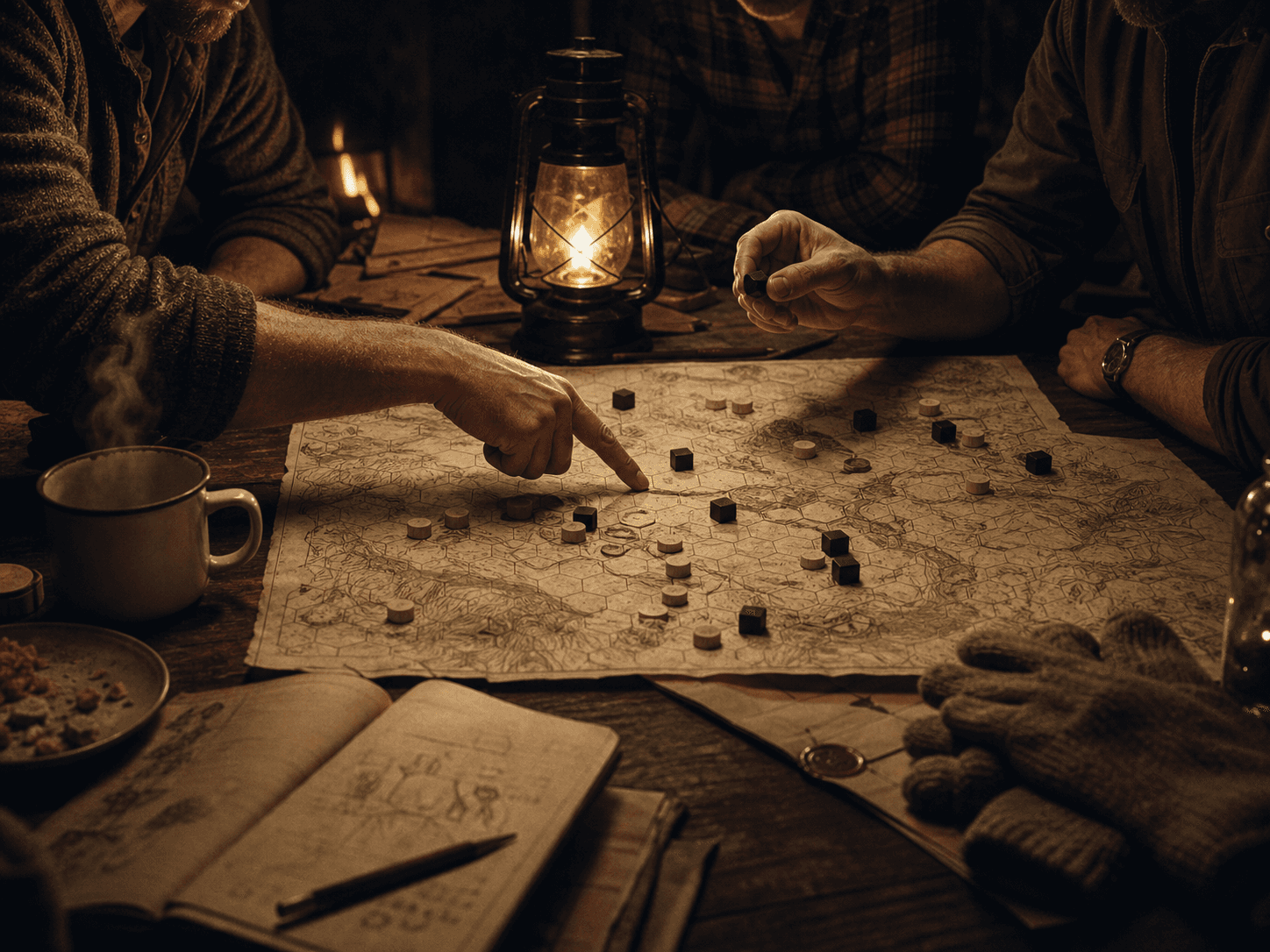
Standard
3–5 hunters
The full table. A six-hour board game, run in a browser, as fast as your group can talk.
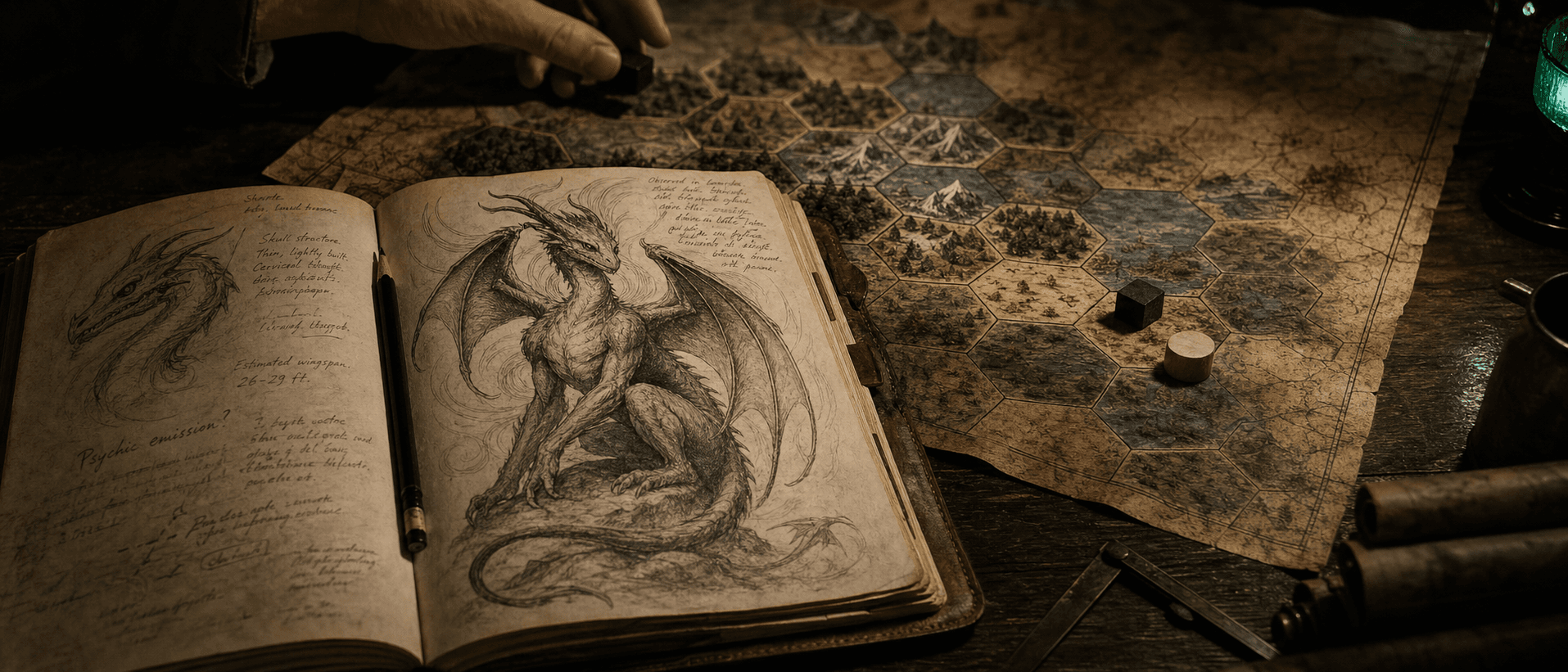
A deduction game where the truth is what hides the answer.
Chapter One
You will not be told what it looks like, or how large it is, or whether it has seen you. You will be told one thing — a single, verified detail about where it lives.
That is everything you get.
There are four other hunters at this table. Each of them has been told a different detail. None of them will say theirs out loud. Neither will you.
The creature is sitting in the only place on this map where all five details are true at the same time.
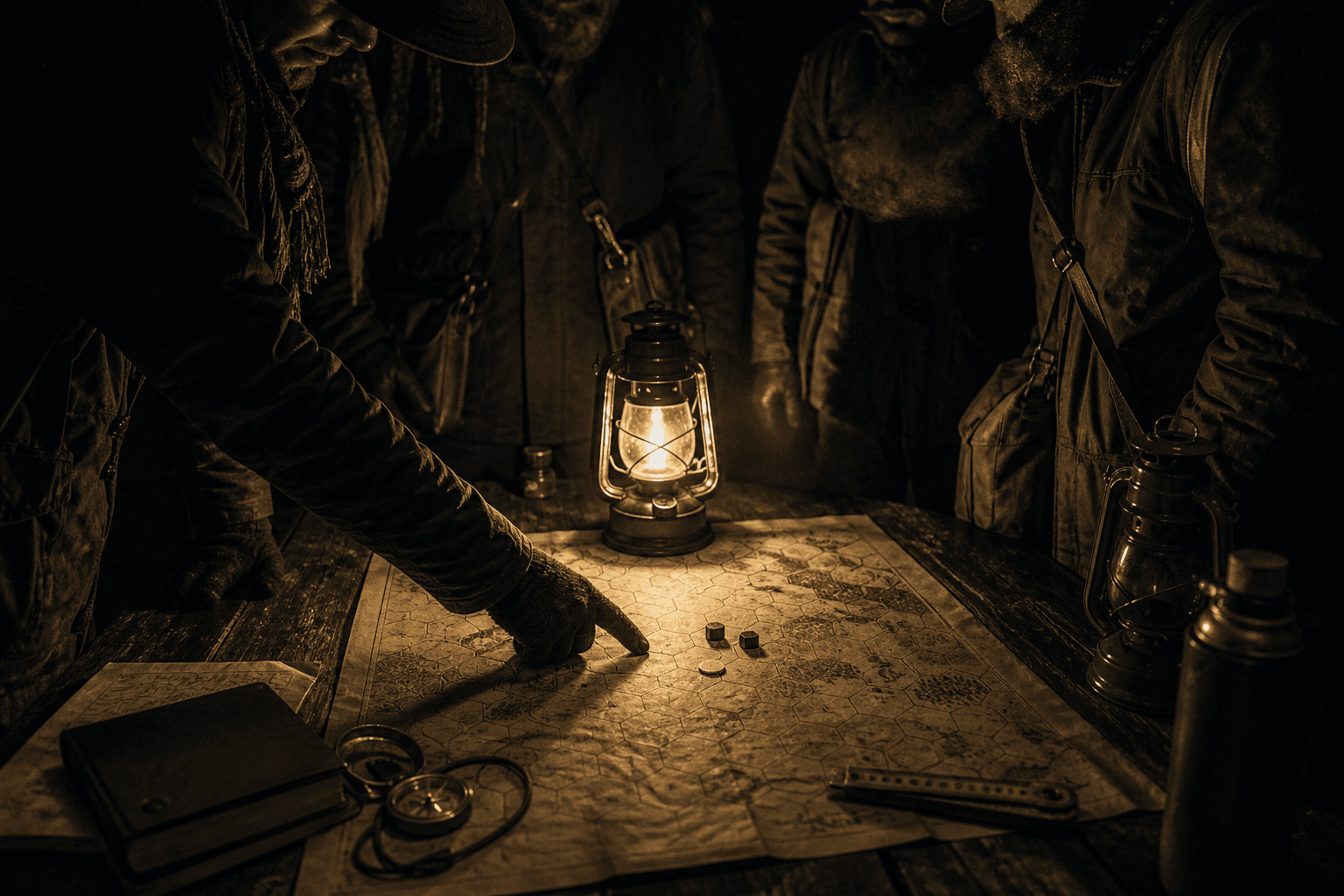
The strange part is this. Nobody is allowed to lie. Every question you ask gets an honest answer. And the truth, asked in the wrong order, is enough to keep a creature hidden from the very people who already know where it is.
You point at a hex. You ask. You watch.
Find it before they do.
The Mechanic
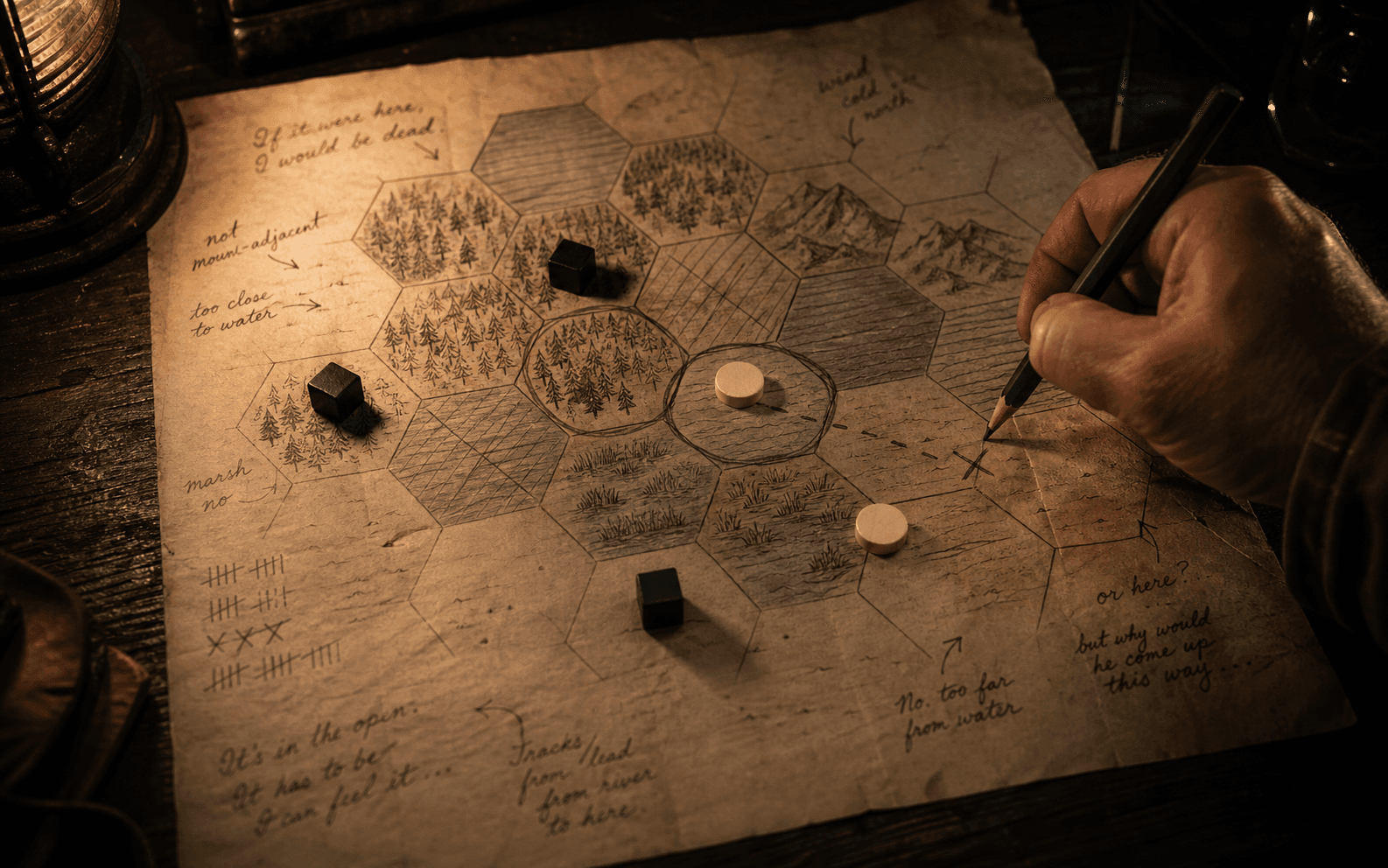
Pick a hex. Ask any other hunter, could the creature be here?
They have to answer honestly. If their clue allows the hex, they place a disc — a yes. If it doesn’t, they place a cube — a no.
Every cube is a piece of someone else’s clue made visible. Every disc narrows the field for the whole table.
When you think you know, you search.
If you are right, you have won. If you are wrong, you have just told everyone something about your card.
The Table
3–5 hunters
The full table. A six-hour board game, run in a browser, as fast as your group can talk.
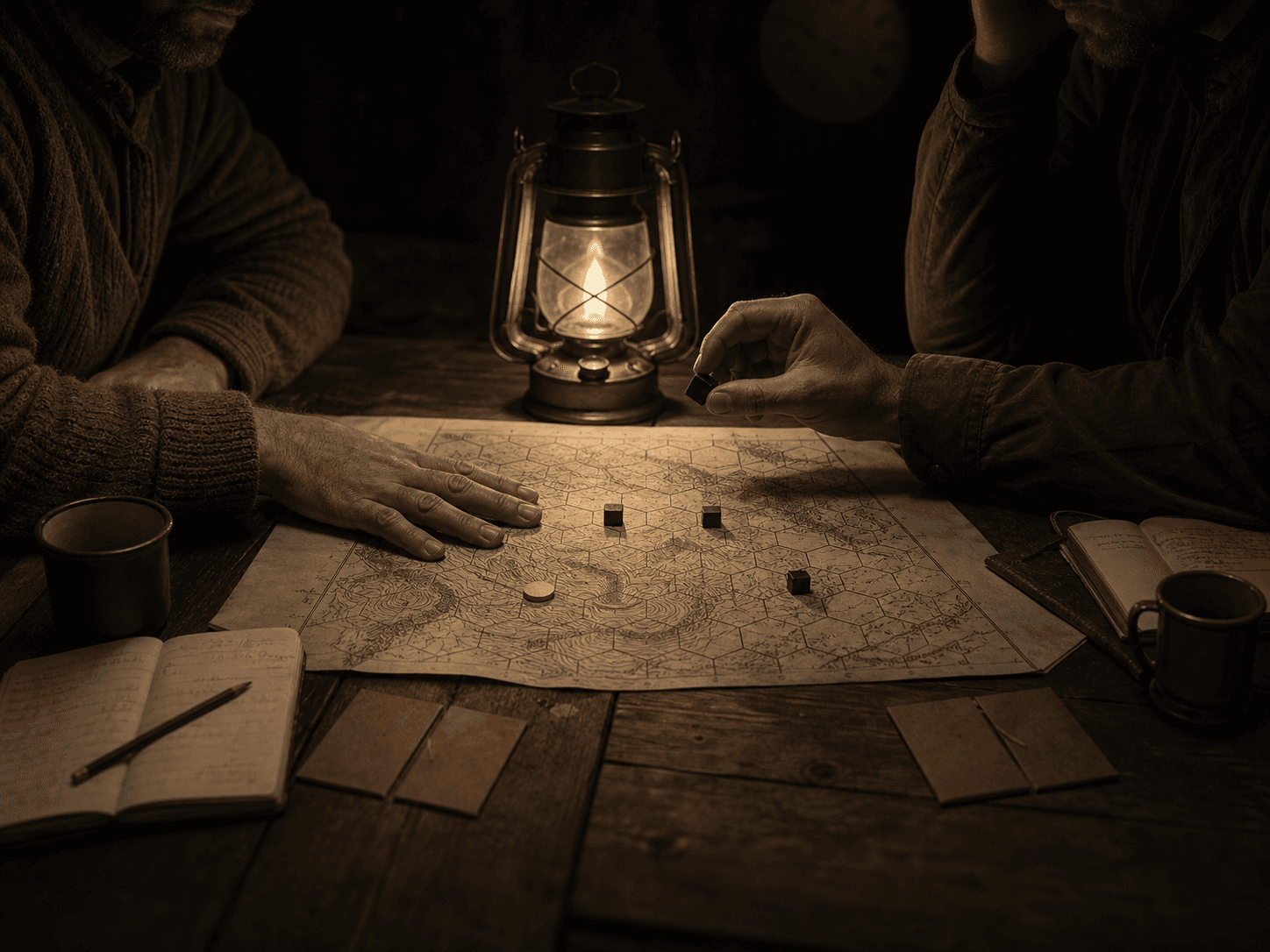
2 hunters
Two hunters, two clues each. Half deduction, half memory. Most hunting games aren’t built for two; this one was.
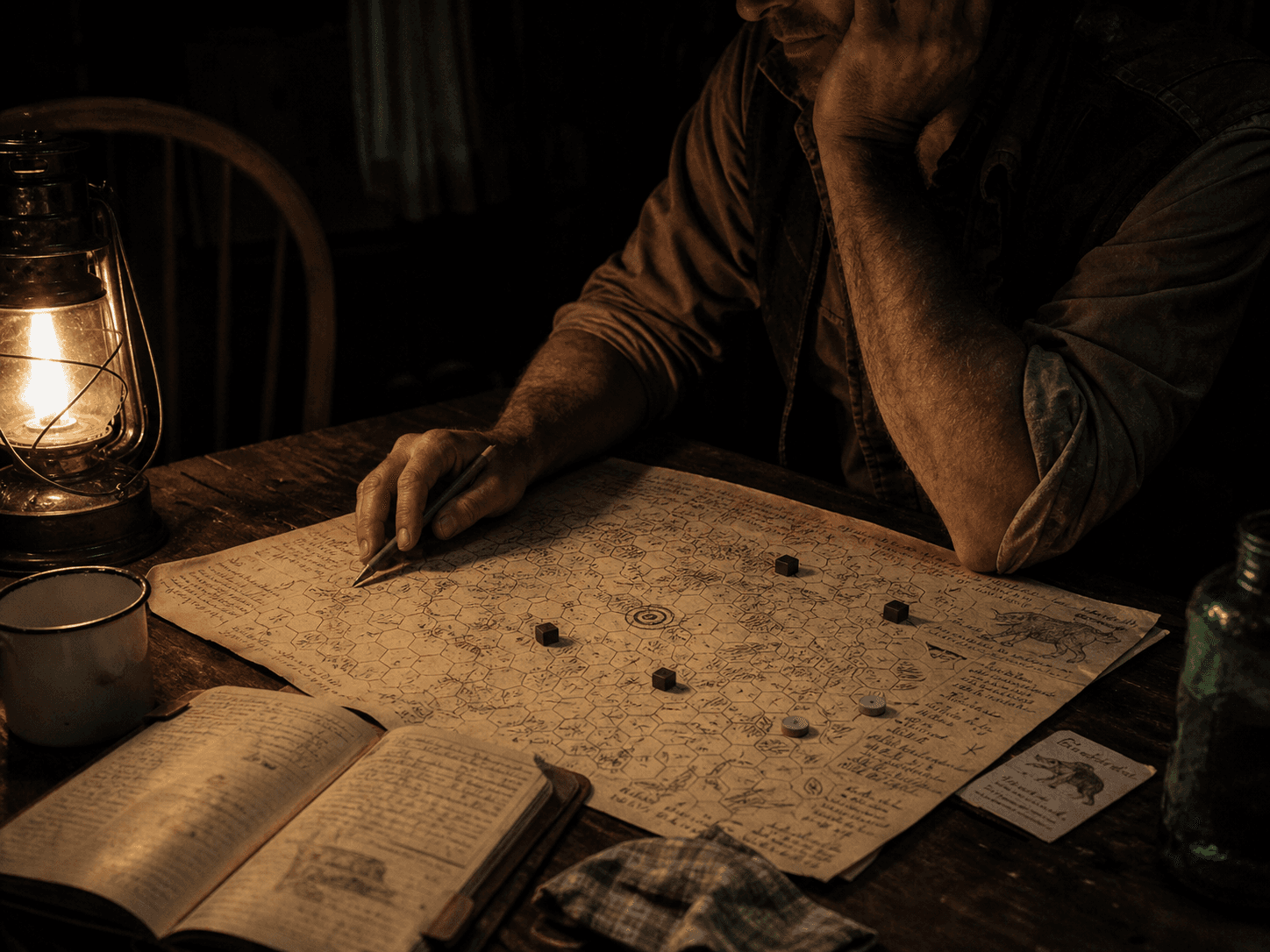
You against the map
Phantom hunters reveal information without taking turns. You pick the difficulty. The board has one answer, and only one, and it is on you to find it.
Under the Hood
The hunt breaks the moment a single rule slips. A clue enforced loosely. A board with two valid answers. A turn that drifts by one. The whole structure collapses into noise.
So nothing slips.
Every move is validated on the server. Every clue is enforced by code, not by trust. Every board has one answer, and only one, and a computer has checked.
Two hundred boards. Verified.
If you’ve ever played a deduction game where a clue almost works, you know how that feels. None of these boards almost work.
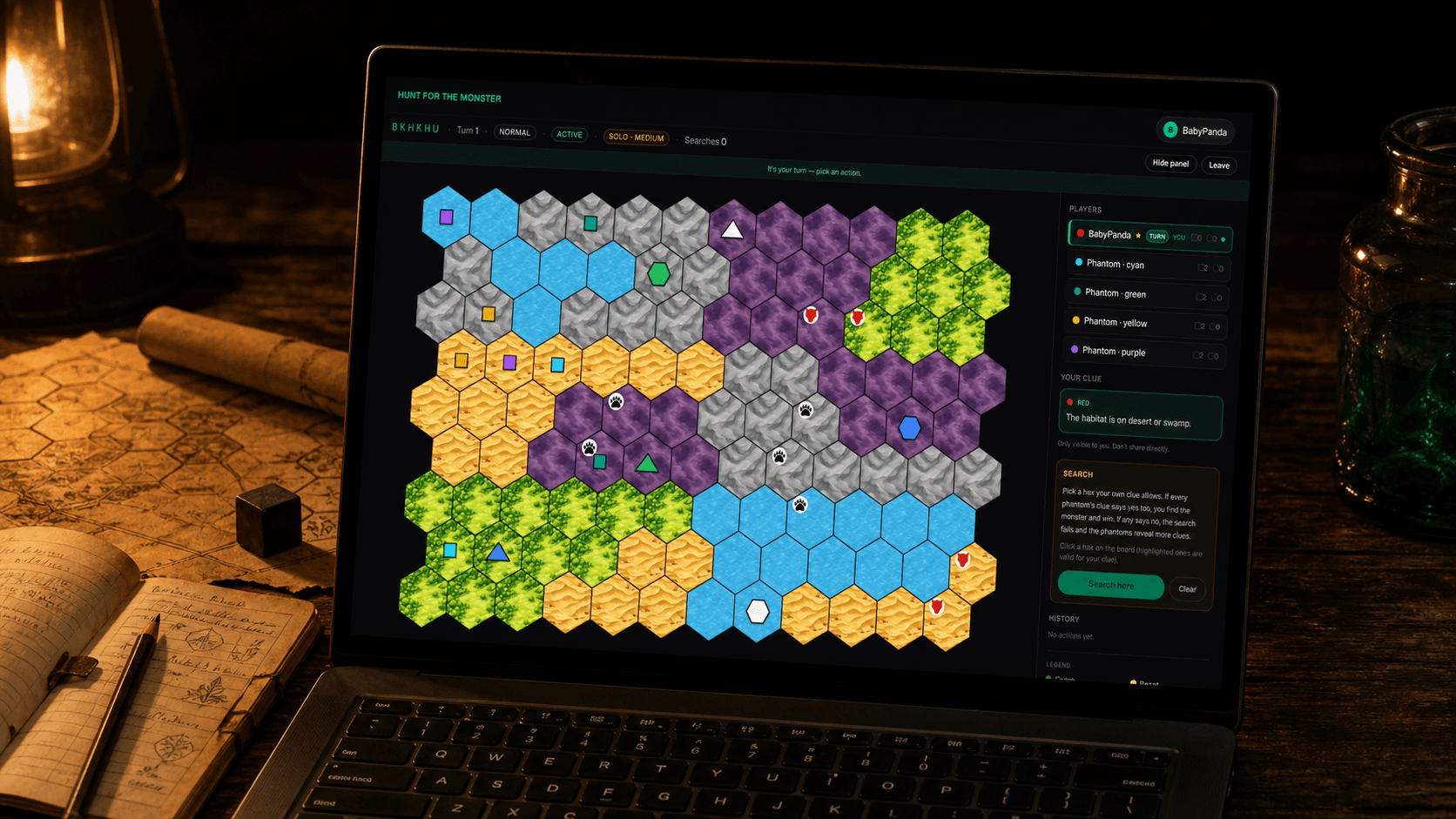
The Hunt
Somewhere on it, the creature is breathing.
Find it first.